When the Past Won’t Stay in the Past

Part of our 10 for when series:
PTSD
If the past keeps showing up in your present, you're not alone, and you don’t have to stay stuck there.
Here are some resources to reach for on the days when the past feels heavier than usual.
A Familiar Scene
There’s an episode of the TV show Grey's Anatomy where Dr. Cristina Yang is awakened in the middle of the night by her boyfriend, Dr. Owen Hunt, an army veteran experiencing a trauma response in his sleep. Before falling asleep, he had been watching the blades of a ceiling fan, which triggered memories of helicopter blades during combat in Afghanistan.
While the scene is dramatic, it reflects something real: trauma can cause the brain and body to respond as though danger is happening in the present, even when the event is over.
But PTSD does not always look like dramatic flashbacks or visible panic. Sometimes it looks quieter:
A child having recurring nightmares
A teenager struggling to focus in school
Someone avoiding certain places or situations
A parent constantly on edge after a frightening experience
An adult feeling emotionally numb long after a traumatic event has passed
Trauma responses are not always loud. Sometimes they settle into everyday life like background static, quietly shaping how someone feels, thinks, and moves through the world.
10 for When is a monthly series dedicated to one mental health topic at a time, offering ten practical resources you can save, share, and return to whenever you need them most.
This month’s focus: PTSD
Imagine this:
You’re at a birthday party with your two children, Noah, age 3, and Jessie, age 7. The backyard is full of families, a bounce house, music, hot dogs on the grill, and kids running everywhere. Jessie heads toward the pool. Noah follows close behind.
Just as you’re about to help Noah put on his floaties, another child nearby begins choking. You rush over to help.
While your attention is elsewhere, Noah falls into the pool.
Jessie jumps in immediately, but he struggles to pull his younger brother up. By the time an adult helps get Noah out of the water, he isn’t breathing. You perform CPR, and after several terrifying moments, he coughs up water and starts breathing again.
Everyone survives. Eventually, Noah learns to swim. Life continues.
But years later, you still can’t walk past the backyard pool without feeling panic rise in your chest. Your mind flashes back to Noah lying motionless beside the water. You avoid pool parties. You struggle to sleep. You replay the moment constantly and feel unable to relax around your children, even in safe situations.
The event is over, but your nervous system still responds as though the danger could happen again at any moment.
That’s part of what PTSD can feel like.
What Is Post Traumatic Stress Disorder?
Post-Traumatic Stress Disorder (PTSD) is a mental health condition that can develop after experiencing, witnessing, or learning about a traumatic event. Trauma can include events such as violence, abuse, accidents, natural disasters, medical emergencies, combat exposure, sudden loss, or other experiences that overwhelm a person’s sense of safety.
Many people experience distress after trauma, and some symptoms can be a normal short-term response to overwhelming stress. For some individuals, however, symptoms persist long after the event and begin interfering with daily life, relationships, work, school, or overall wellbeing.
PTSD can affect people of all ages, including children and adolescents.
For a long time, PTSD was primarily associated with military combat veterans. While veterans can absolutely experience PTSD, trauma is not limited to war zones. PTSD can affect anyone.
Common Symptoms of PTSD
PTSD symptoms generally fall into four categories:
Intrusive Symptoms
Flashbacks or distressing memories
Nightmares
Emotional or physical reactions to reminders of the trauma
Avoidance
Avoiding places, people, conversations, or activities connected to the trauma
Emotional withdrawal or numbness
Changes in Mood and Thinking
Persistent fear, shame, anger, or guilt
Difficulty trusting others
Feeling detached from people or life around you
Changes in Physical and Emotional Reactivity
Being easily startled
Difficulty sleeping
Irritability or hypervigilance
Trouble concentrating
Not everyone experiences PTSD the same way, and symptoms can appear differently across cultures, ages, and life experiences.
Common Misconceptions About PTSD
PTSD is often misunderstood or oversimplified. Some common myths include:
PTSD only happens to veterans or people in combat
Everyone who experiences trauma develops PTSD
PTSD symptoms always begin immediately after trauma
PTSD always involves dramatic flashbacks
People with PTSD are violent or dangerous
PTSD will go away on its own if ignored
In reality, trauma responses exist on a spectrum, and recovery looks different for everyone.
What Happens in the Brain and Body?
When humans encounter danger, the nervous system activates survival responses often described as fight, flight, freeze, or fawn. During stressful situations, the brain prioritizes survival over higher-level processing.
For people with PTSD, reminders of the traumatic event can continue triggering those survival responses long after the threat has ended. The brain and body may react as though danger is still present, even in safe environments.
Researchers continue studying exactly how trauma affects memory, stress regulation, and the nervous system, but PTSD is understood to involve complex interactions between psychological, neurological, and physiological processes.
Healing Is Possible
PTSD can feel isolating, confusing, and exhausting, but treatment can help. Many people experience meaningful improvement with appropriate support and care.
Evidence-based treatments for PTSD may include:
Cognitive Behavioral Therapy (CBT)
Cognitive Processing Therapy (CPT)
Prolonged Exposure Therapy (PE)
Eye Movement Desensitization and Reprocessing (EMDR)
Narrative Exposure Therapy (NET)
Medication prescribed by a qualified healthcare provider when appropriate
Some people also find additional support through practices such as:
Journaling
Mindfulness and grounding exercises
Breathwork or meditation
Movement practices like yoga or walking
Creative outlets such as music or art
Peer support groups
Spending time with trusted friends, family, or supportive communities
These supports are not replacements for professional treatment, but they can complement recovery and help people feel more connected and regulated over time.
If This Feels Familiar
If parts of this feel recognizable, you are not weak, dramatic, or “broken.” Trauma can affect the nervous system in powerful ways, and many people live with symptoms for years before understanding what they are experiencing.
A helpful first step can be talking with someone you trust or reaching out to a licensed mental health professional.
PTSD often does not fully resolve without support, but recovery is possible, and people do heal.
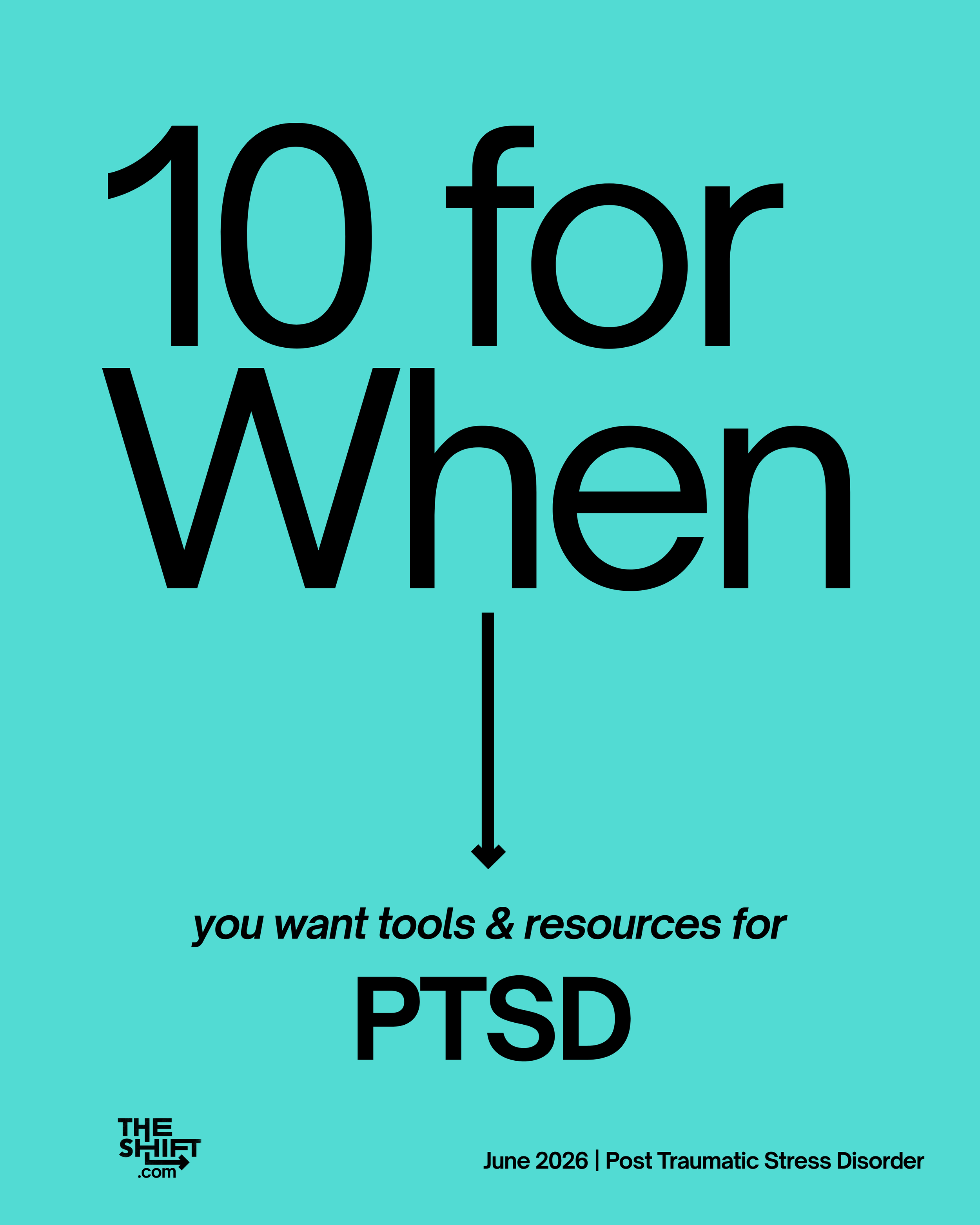
if you’re struggling with PTSD - view our list of 10 for When.
10 for When is your go-to swipe sheet of tools, resources, and support for the moments when the hard stuff shows up, because it will. Consider this your standing invitation to be a little more ready than you were yesterday.
Disclaimer: This blog is not meant as professional advice or counseling. If you are in emotional distress or experiencing thoughts of harm to yourself or others, help is available 24/7:
If in crisis, call 988
Text HELLO to 741741 to connect with a Crisis Text Line counselor
Call the National Suicide Prevention Lifeline:
1–800–273–8255 (TALK) Spanish & English
Deaf & Hard of Hearing TTY 800–799–4889
Call 911
If you need mental health treatment but cannot afford it, contact Rise Above The Disorder, a 501(c)(3) non-profit dedicated to making mental health care accessible to everyone: YouAreRAD.org